An Optimal Algorithm for the Stacker Crane Problem on Fixed Topologies

Yike Chen, Ke Shi, Chao Xu

Stacker Crane on a graph

\(\newcommand{\R}{\mathbb{R}}\) \(\newcommand{\Z}{\mathbb{Z}}\) \(\newcommand{\N}{\mathbb{N}}\)

For a graph \(G=(V,E)\) with cost on the edges. A single vehicle with capacity 1 is at position \(s_0\in V\).

  • There are \(p\) requests of the form \((s_i,t_i) \in R \subseteq V\times V\).
  • Complete a request: vehicle pick up item \(i\) from \(s_i\), and move it to \(t_i\) without dropping it off anywhere on the way.
  • Goal: Find a tour that start and end on \(s_0\), completes all requests and minimizes the total cost.

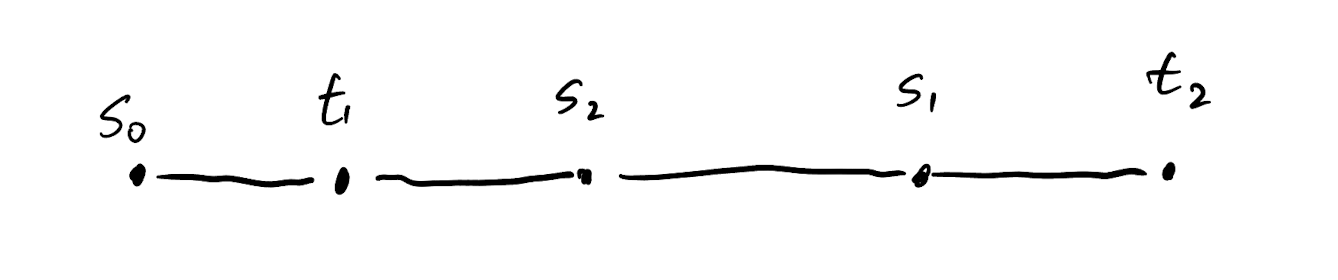
Stacker Crane on a path

Stacker Crane on a path

\(s_0\)

\(\color{blue}{s_1}\)

\(\color{blue}{t_1}\)

\(\color{red}{s_2}\)

\(\color{red}{t_2}\)

Stacker Crane on a path

\(s_0\)

\(\color{blue}{s_1}\)

\(\color{blue}{t_1}\)

\(\color{red}{s_2}\)

\(\color{red}{t_2}\)

Stacker Crane on a path

\(s_0\)

\(\color{blue}{s_1}\)

\(\color{blue}{t_1}\)

\(\color{red}{s_2}\)

\(\color{red}{t_2}\)

Stacker Crane on a path

\(s_0\)

\(\color{blue}{s_1}\)

\(\color{blue}{t_1}\)

\(\color{red}{s_2}\)

\(\color{red}{t_2}\)

Stacker Crane on a path

\(s_0\)

\(\color{blue}{s_1}\)

\(\color{blue}{t_1}\)

\(\color{red}{s_2}\)

\(\color{red}{t_2}\)

Stacker Crane on a path

\(s_0\)

\(\color{blue}{s_1}\)

\(\color{blue}{t_1}\)

\(\color{red}{s_2}\)

\(\color{red}{t_2}\)

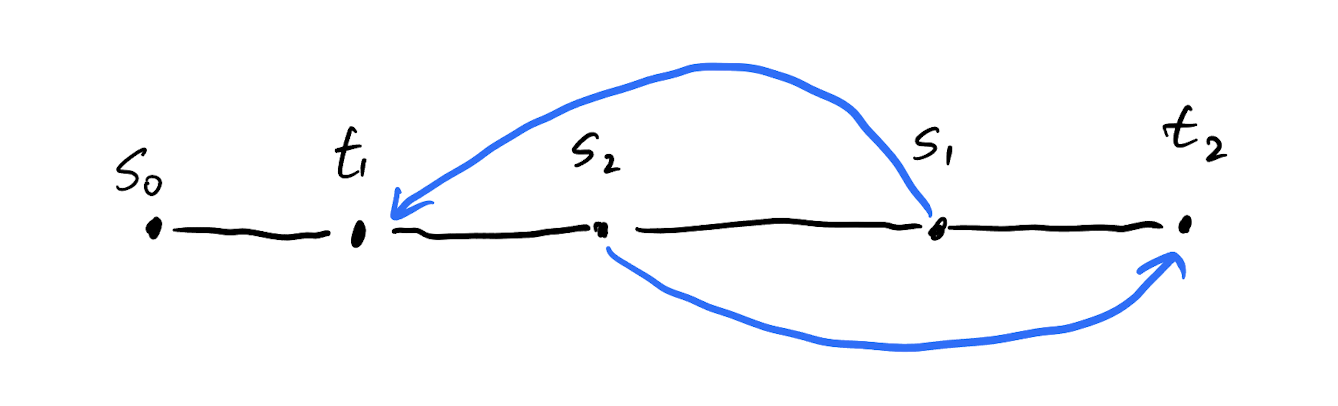
Stacker Crane on a path (Not as good)

\(s_0\)

\(\color{blue}{s_1}\)

\(\color{blue}{t_1}\)

\(\color{red}{s_2}\)

\(\color{red}{t_2}\)

Mixed Graph Formulation

Input: A base graph \(B=(V,E)\), requests \(R\subseteq V\times V\), cost \(c:E\to \R^+\). Let \(G=(V,E\cup R)\) be a mixed graph.

Output: A min-cost tour of \(G\) where each edge in \(R\) is used exactly once.

\(m=|E|\), \(n=|V|\), \(p=|R|\)
Stacker Crane Extensions

Generalizations are called dial-a-ride problems.

Known results

For base graphs:

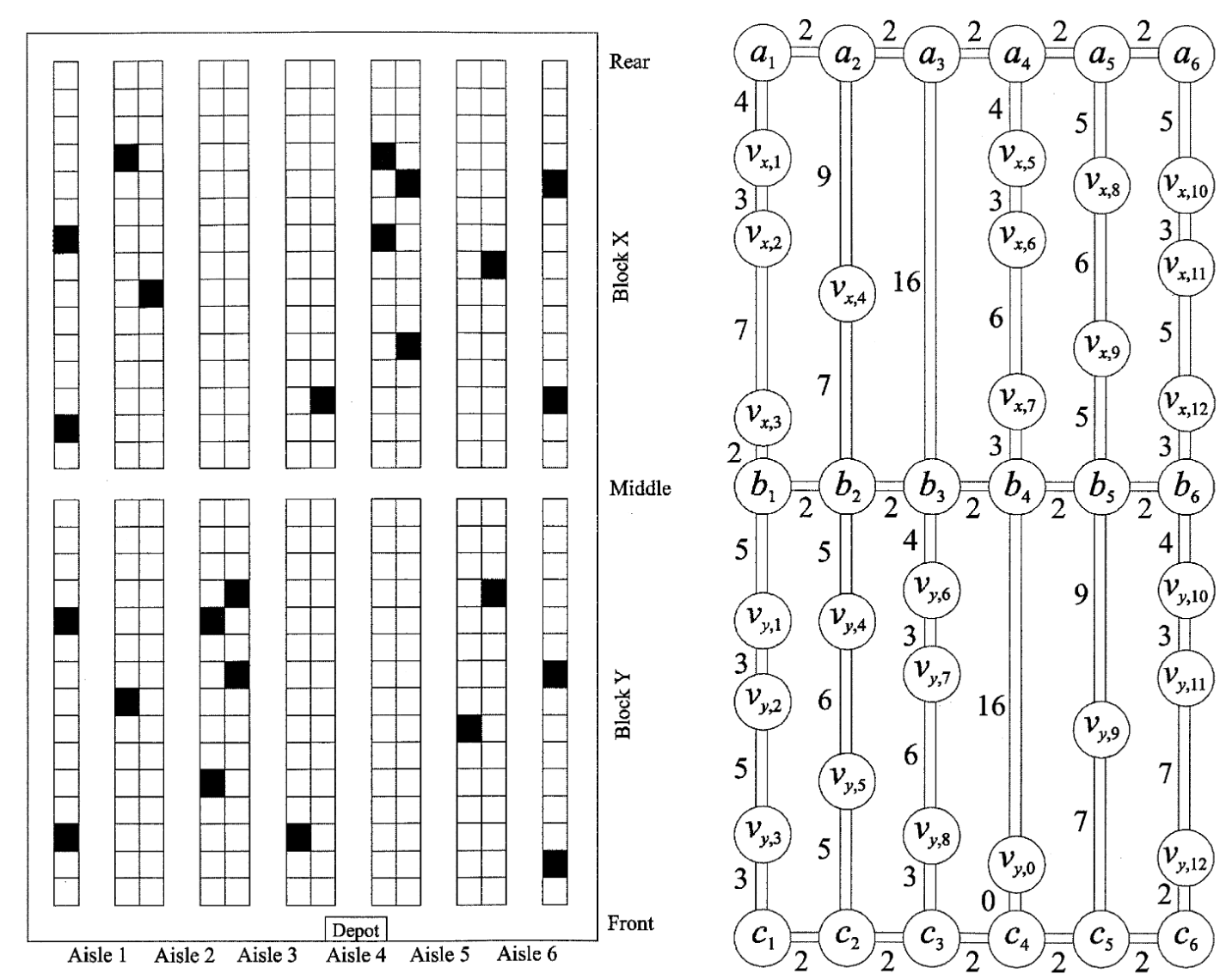
Motivation: Topology of Warehouses

Image courtesy (Roodbergen and Koster 2001)

Our result

Stacker Crane Problem for a fixed topology can be solved in \(O(MST(m)+p)\) time.

Stacker Crane Problem is FPT parametrized by cycle rank and branch number of the base graph.

In This talk

  • Review the algorithm for paths and cycles
  • Show the correct generalization to general graphs

Solve SCP on paths and cycles

Algorithms of (Atallah and Kosaraju 1988; Frederickson 1993).

Tours and flows

Using the original formulation (no mixed graph).

  • Every solution (tour) maps to a circulation: the difference of the tour edge going forward and backwards is the flow on the edge.

Paths

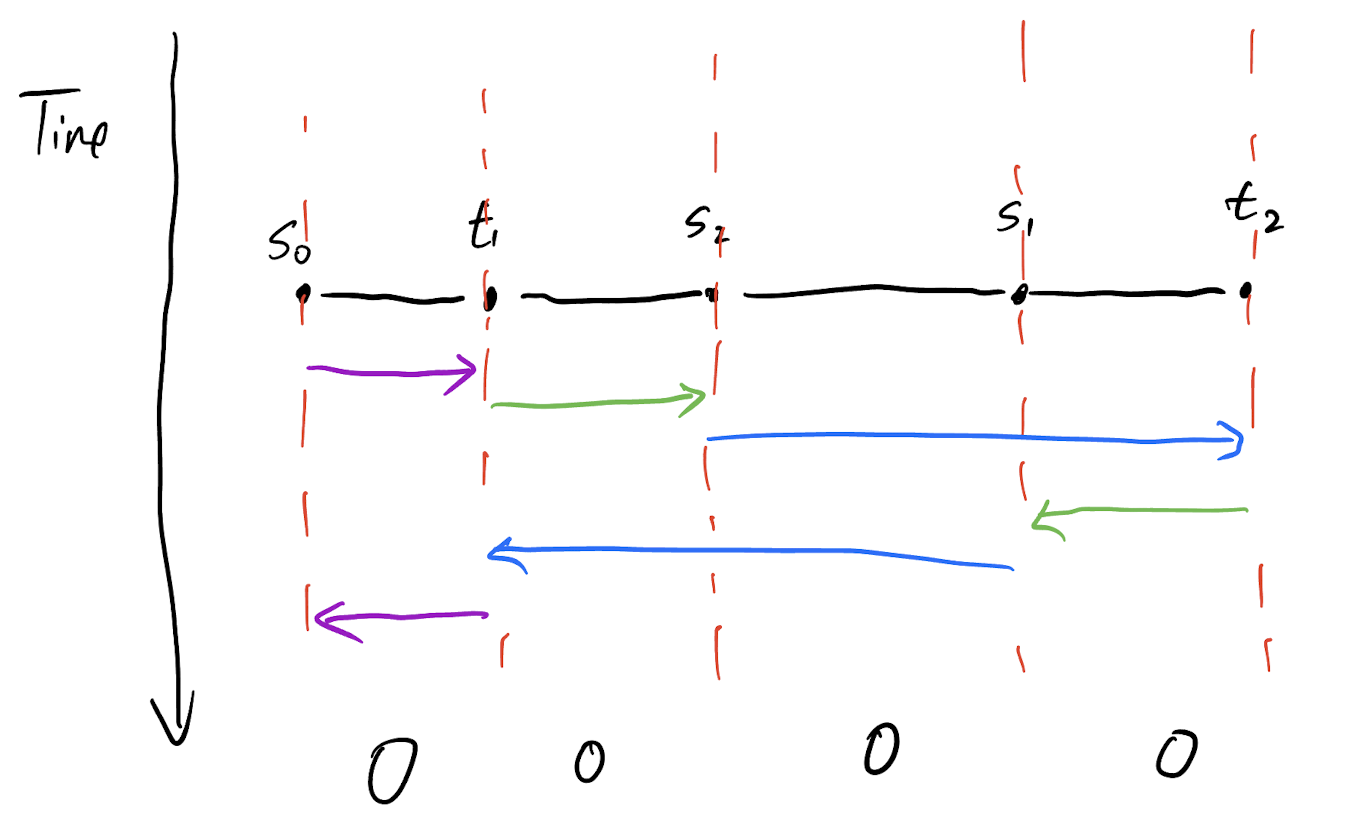
Tour traverse through a edge forward and backward the same number of times. Flow is \(0\) on all edges (flow condition).
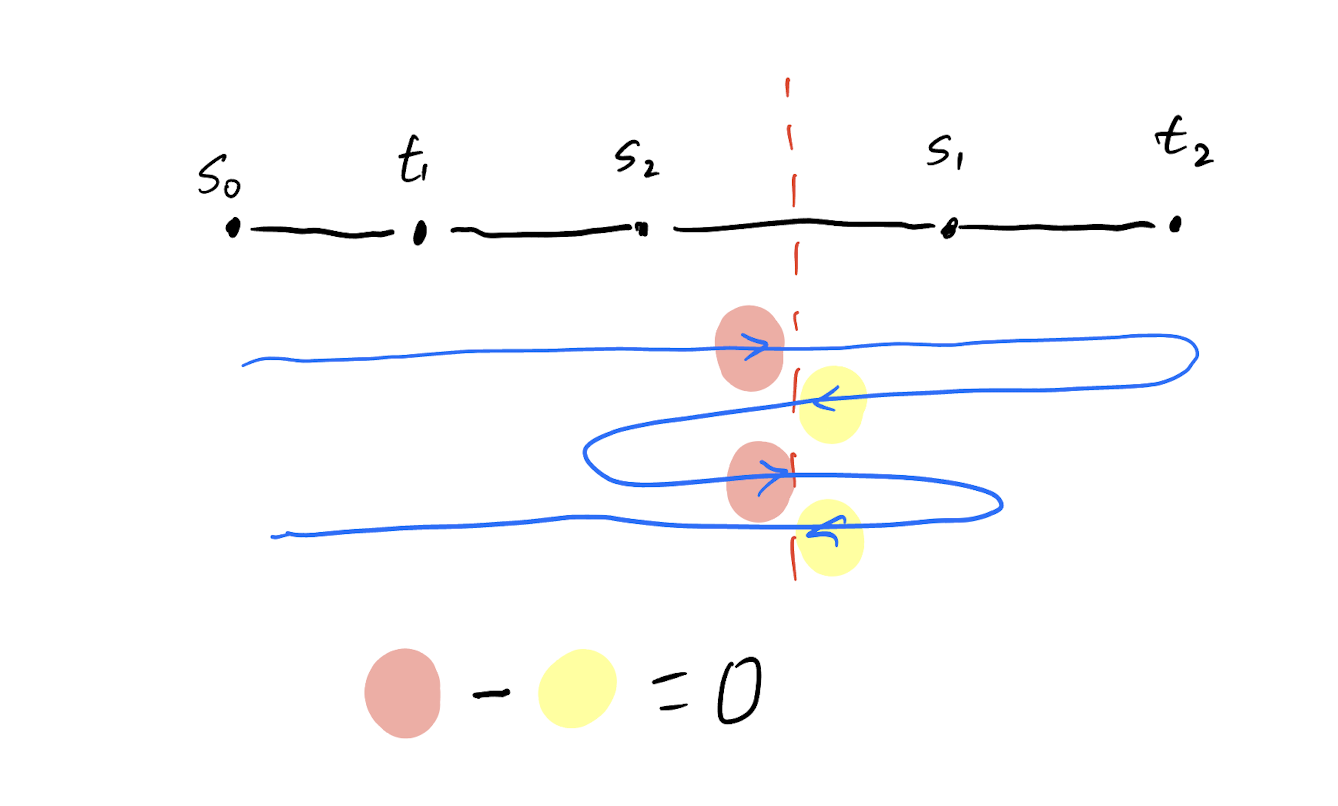
The tour must traverse through \(s_i\) to \(t_i\).
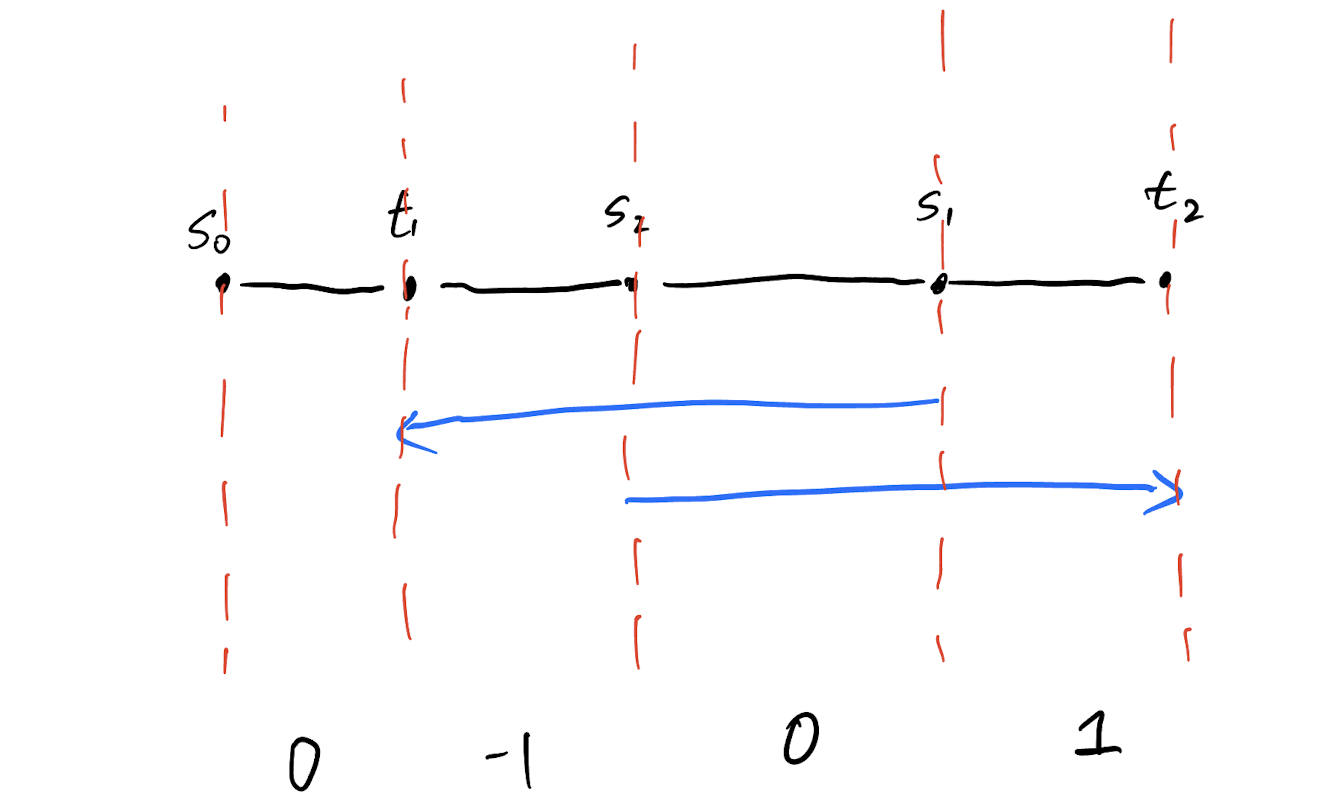
Add paths to fix the flow condition.
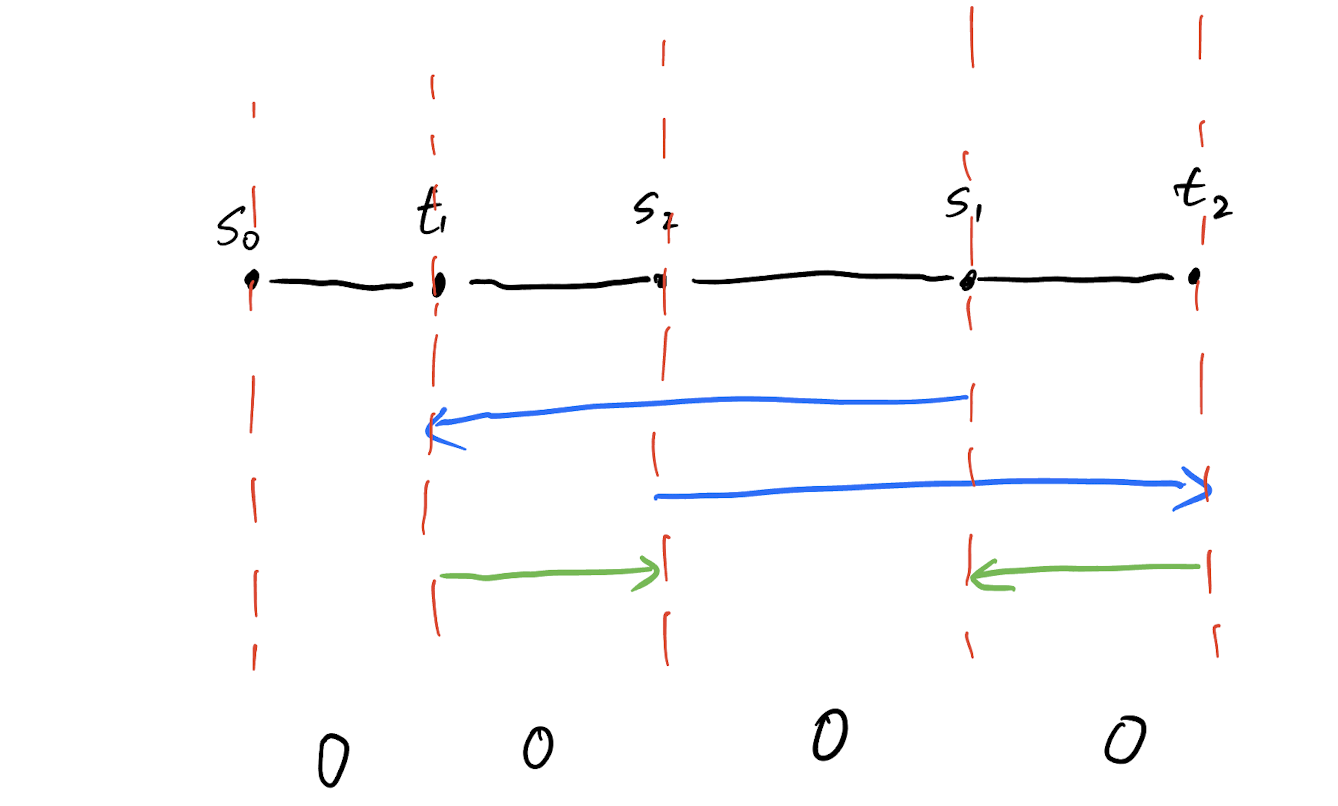
Add opposing edges to make sure the tour is connected.
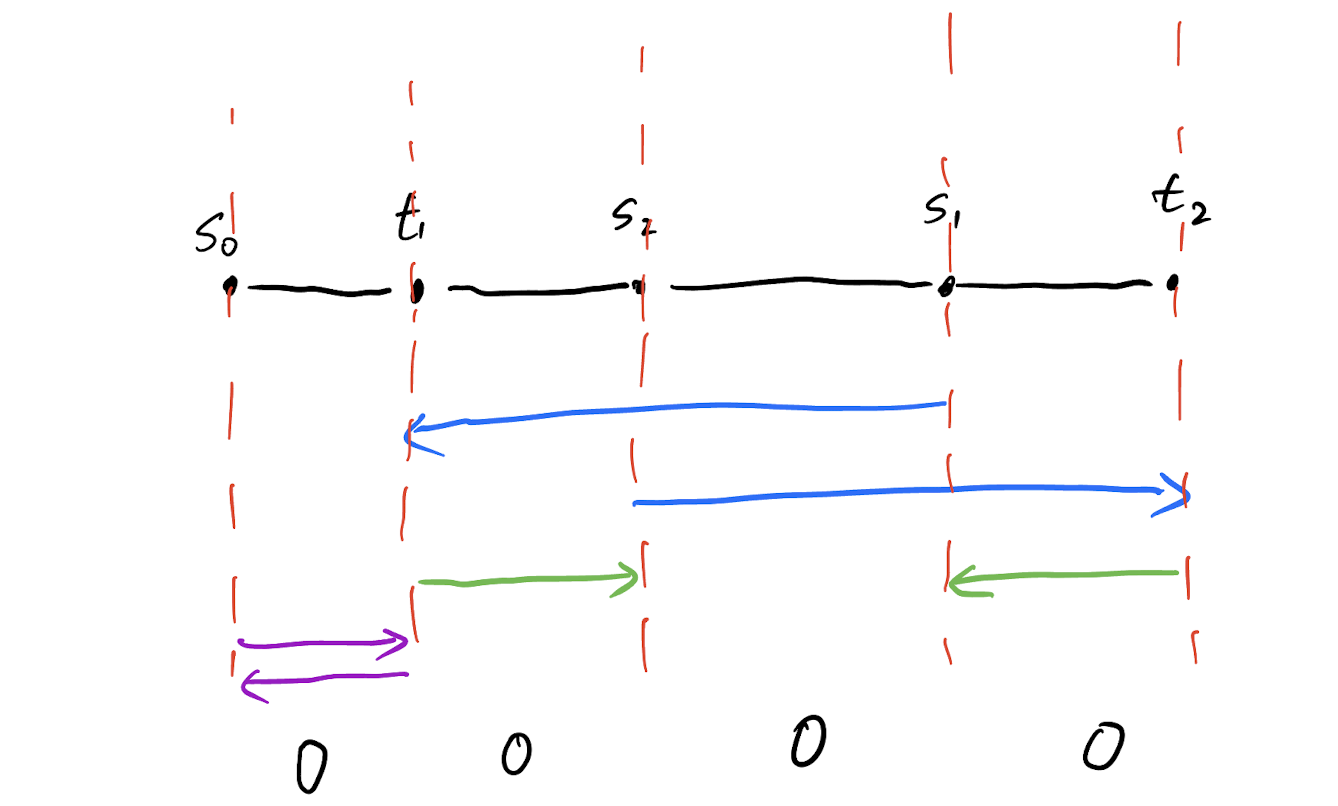
Remove some vertices not incident to any edge already in the tour.
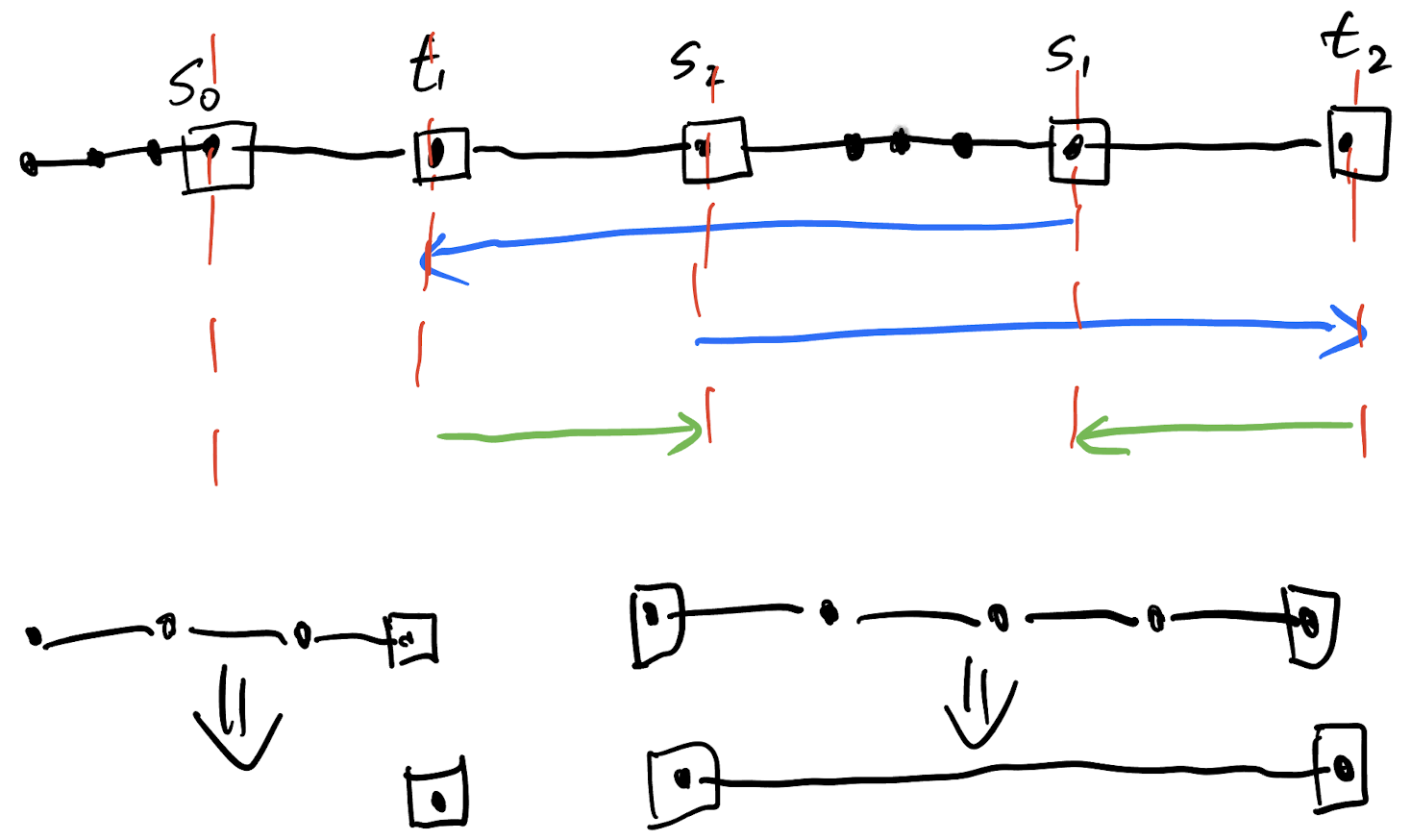
Reduced to minimum spanning tree.

Obtain a complete solution by construct a tour through the chosen edges.
SCP on a cycle

flow = 0?
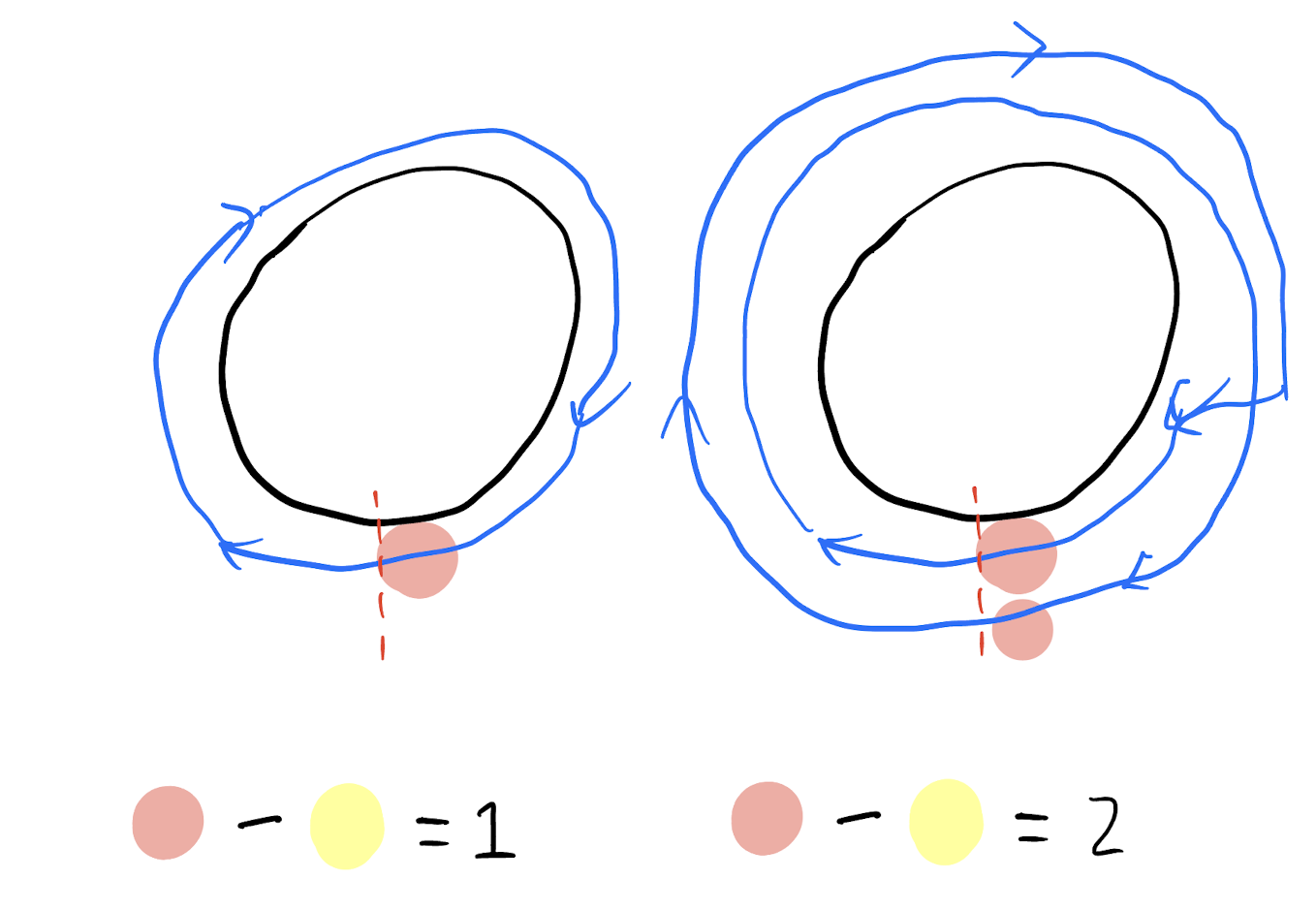
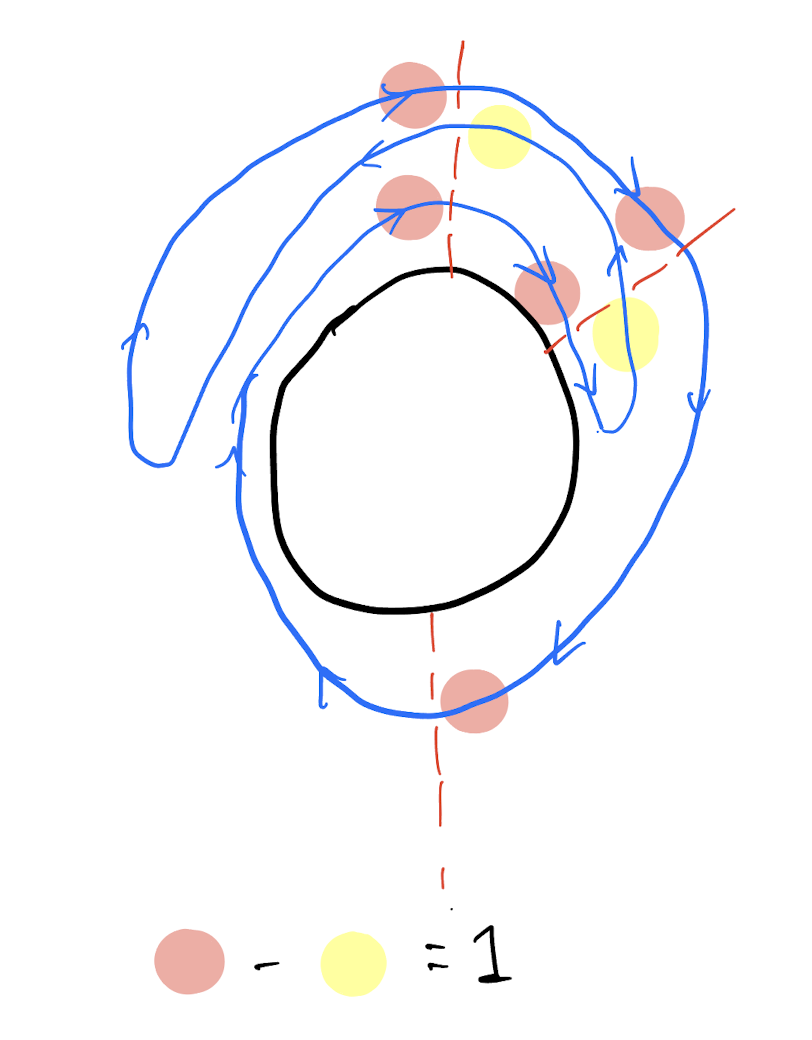
Winding Number

  • The flow is equal on each edge! (the new flow condition)
  • The winding number.

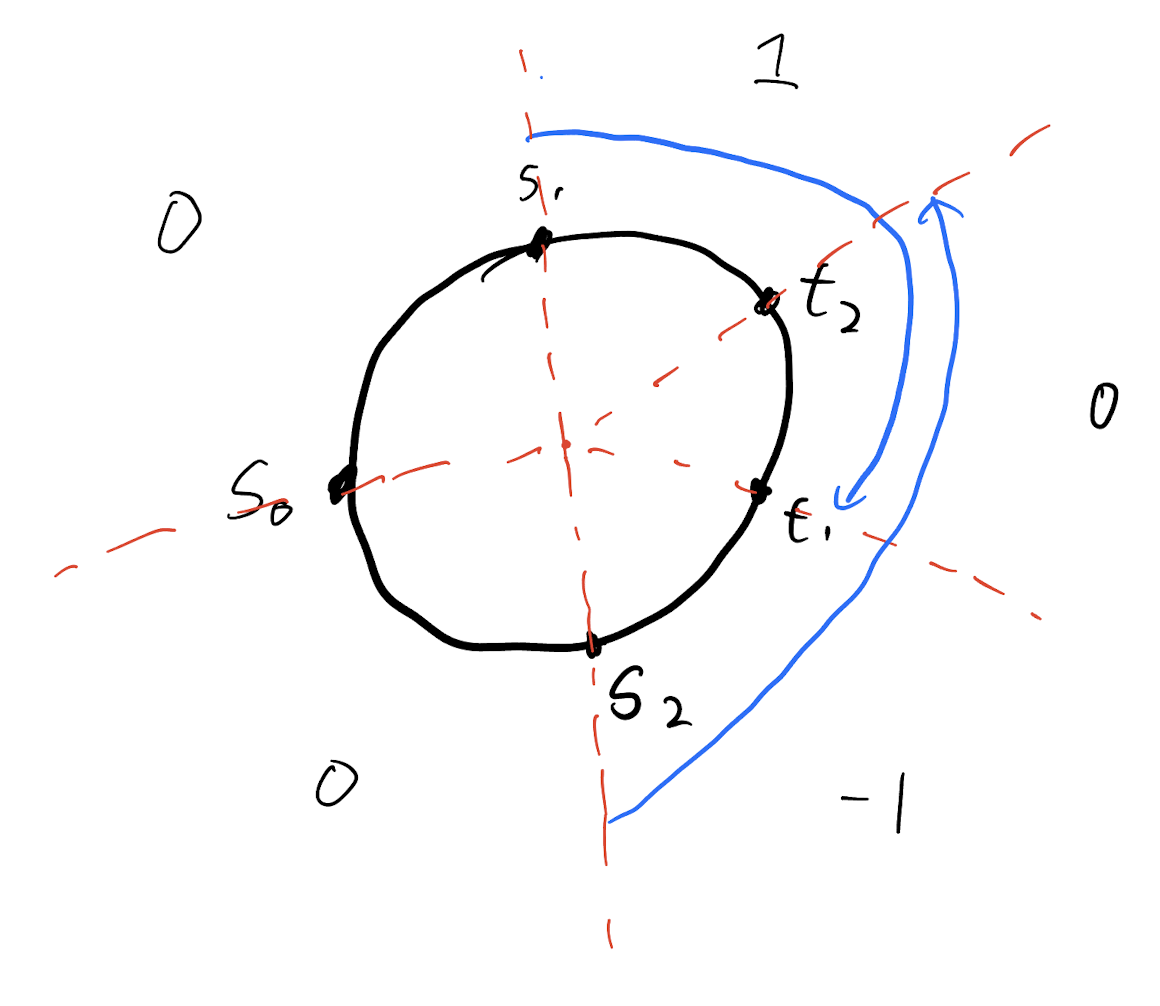
Solution with winding number = 1

First, add the request paths.
Solution with winding number = 1

Add edges to make sure each edge forward - backword = 1
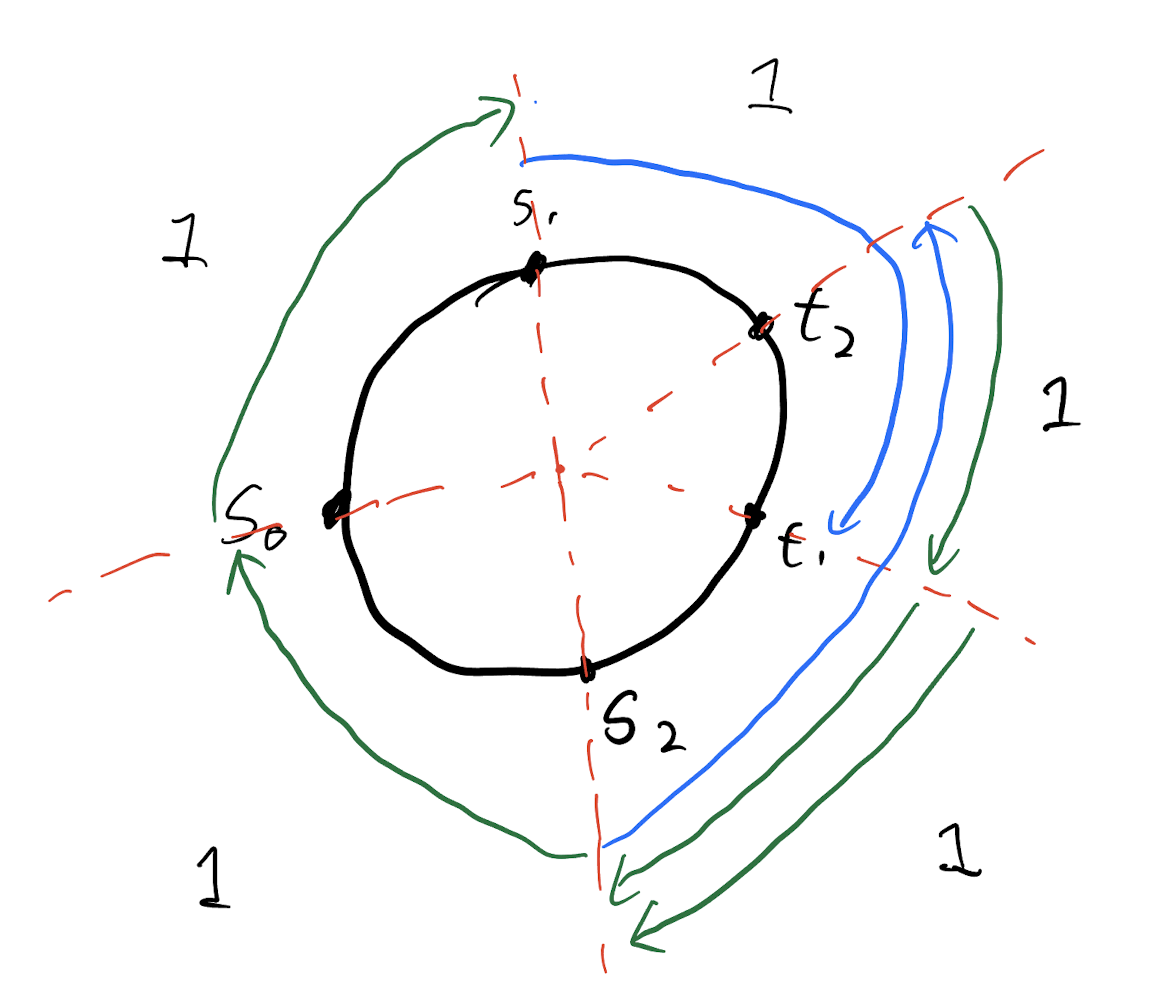
Solution with winding number = 1

Run minimum Steiner tree to get the set opposing edges to connect the tour.

A complete solution for cycles

  • Guess all possible winding numbers.
  • The guess is in between \([-p,p]\).
  • For each guess \(w\), compute a optimum solution with winding number \(w\).
  • \(O(p(MST(m)+p))\) running time.

Proximity Result

  • Find a min-cost circulation \(f\) that satisfies the flow condition.
  • Assume the optimum tour maps to circulation \(g\).
  • \(\|f-g\|_\infty \leq 1\) (Frederickson 1993)
  • \(O(MST(m)+p)\) running time.

SCP on general graphs

Min-cost tour

  • Think in mixed graph formulation.
  • A valid circulation \(f\), is a circulation with flow value \(f(e)=1\) on each edge \(e\in R\). All circulations are valid circulations from this point on.
  • Each tour maps to a circulation. \([f]:=\) tours that maps to \(f\).
  • \([f]\) is called a homology class.
  • \(r:=m-n+1\) is the cycle rank of the base graph \(B\).
  • Vertices with degree \(\geq 3\) are branch vertices.
  • \(k\) is the number of branch vertices in \(B\).

Interpertation of the algorithm

  1. Find a min-cost circulation \(f\).
  2. Find all circulations \(g\) such that \(\|f-g\|_\infty\leq r\).
  3. Find a min-cost tour in each \([g]\) and returns the minimum.

Proximity Theorem

Let \(f\) be the min-cost circulation, the min-cost tour is in \([g]\) for some circulation \(g\) such that \(\|f-g\|_\infty\leq r\).

Min-cost circulation

  • Reduces to min-cost flow on tree with \(r\) more edges.
  • Reduces to a special kind of linear program.
  • The minimizer can be found in \(2^{O(2^r)} m = O(m)\) time (Zemel 1984).

Enumerate circulations

Theorem

There are \(O((2d+1)^r)\) circulations \(g\) such that \(\|f-g\|_\infty \leq d\), and can be enumerated in \(O((2d+1)^rm)\) time.

Minimum Steiner Tree Problem

Minimum Steiner Tree

Given a weighted graph \(G=(V,E)\) and a set of terminal vertices \(T\subseteq V\). Find a minimum weight tree that connects all vertices in \(T\).

  • NP-hard in general
  • \(O(2^k MST(m))\) time if the input has at most \(k\) Steiner branch vertices.

Min-cost tour in \([g]\)

  • \(B'\) obtained from \(G\) by contract all support edges in \(g\).
  • \(T\) be all vertices in \(B'\) obtained from contraction.
  • min-cost tour in \([g]\) \(\Leftrightarrow\) minimum Steiner tree in \(B'\) with terminals \(T\).
  • \(B'\) can have MANY branch vertices, but at most \(k\) Steiner branch vertices.
  • Finding min-cost tour in \([g]\) takes \(O(2^k MST(m))\) time.

Results

For a base graph with at most \(k\) branch vertices and cycle rank \(r\), the running time of the SCP algorithm is \(2^{O(2^r)}m + O((2r+1)^{r} 2^k (MST(m) + p))\).

SCP problem for fixed topologies can be solved in \(O(MST(m) + p)\) time.

Open problem

  • Min-cost flow on a tree with \(r\) additional edges: Better than \(2^{O(2^r)}m\) time?
  • Proximity result: smaller search space than \((2r+1)^r\)?

Open problem

FPT algorithm parametrized by number of branch vertices?

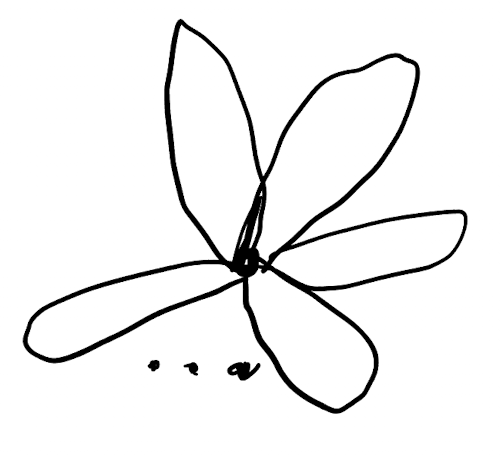
Arbitrary cycle rank, exactly \(1\) branch vertex
References

Atallah, Mikhail J., and S. Rao Kosaraju. 1988. “Efficient Solutions to Some Transportation Problems with Applications to Minimizing Robot Arm Travel.” SIAM Journal on Computing 17 (5): 849–69. https://doi.org/10.1137/0217053.
Baligács, Júlia, Yann Disser, Nils Mosis, and David Weckbecker. 2022. “An Improved Algorithm for Open Online Dial-a-Ride.” In Approximation and Online Algorithms, edited by Parinya Chalermsook and Bundit Laekhanukit, 154–71. Cham: Springer International Publishing.
Charikar, M., and B. Raghavachari. 1998. “The Finite Capacity Dial-a-Ride Problem.” In Proceedings 39th Annual Symposium on Foundations of Computer Science (Cat. No.98CB36280), 458–67. https://doi.org/10.1109/SFCS.1998.743496.
Deleplanque, Samuel, and Alain Quilliot. 2013. “Dial-a-Ride Problem with Time Windows, Transshipments, and Dynamic Transfer Points.” IFAC Proceedings Volumes 46 (9): 1256–61. https://doi.org/https://doi.org/10.3182/20130619-3-RU-3018.00435.
Desrosiers, Jacques, Yvan Dumas, and François Soumis. 1988. “The Multiple Vehicle DIAL-a-RIDE Problem.” In Computer-Aided Transit Scheduling, edited by Joachim R. Daduna and Anthony Wren, 15–27. Berlin, Heidelberg: Springer Berlin Heidelberg.
Frederickson, Greg. 1993. “A Note on the Complexity of a Simple Transportation Problem.” SIAM Journal on Computing 22 (1): 57–61. https://doi.org/10.1137/0222005.
Frederickson, Greg, and D. J. Guan. 1993. “Nonpreemptive Ensemble Motion Planning on a Tree.” Journal of Algorithms 15 (1): 29–60. https://doi.org/10.1006/jagm.1993.1029.
Frederickson, Greg, Matthew S. Hecht, and Chul E. Kim. 1978. “Approximation Algorithms for Some Routing Problems.” SIAM Journal on Computing 7 (2): 178–93. https://doi.org/10.1137/0207017.
Gørtz, Inge Li. 2006. “Hardness of Preemptive Finite Capacity Dial-a-Ride.” In Approximation, Randomization, and Combinatorial Optimization. Algorithms and Techniques, edited by Josep Díaz, Klaus Jansen, José D. P. Rolim, and Uri Zwick, 200–211. Berlin, Heidelberg: Springer Berlin Heidelberg.
Li, Jianping, Xiaofei Liu, Weidong Li, Li Guan, and Junran Lichen. 2017. “Approximation Algorithms for the Generalized Stacker Crane Problem.” In Combinatorial Optimization and Applications, edited by Xiaofeng Gao, Hongwei Du, and Meng Han, 95–102. Cham: Springer International Publishing.
Lois, Athanasios, and Athanasios Ziliaskopoulos. 2017. “Online Algorithm for Dynamic Dial a Ride Problem and Its Metrics.” Transportation Research Procedia 24: 377–84. https://doi.org/https://doi.org/10.1016/j.trpro.2017.05.097.
Roodbergen, Kees Jan, and RenÉde Koster. 2001. “Routing Methods for Warehouses with Multiple Cross Aisles.” International Journal of Production Research 39 (9): 1865–83. https://doi.org/10.1080/00207540110028128.
Sun, Yuhui, Wei Yu, and Zhaohui Liu. 2022. “Approximation Algorithms for Some Min–Max and Minimum Stacker Crane Cover Problems.” Journal of Combinatorial Optimization 45 (1): 18. https://doi.org/10.1007/s10878-022-00955-x.
Yu, Wei, Rui-Yong Dai, and Zhao-Hui Liu. 2023. “Approximation Algorithms for Multi-Vehicle Stacker Crane Problems.” Journal of the Operations Research Society of China 11 (1): 109–32. https://doi.org/10.1007/s40305-021-00372-7.
Zemel, Eitan. 1984. “An O(n) Algorithm for the Linear Multiple Choice Knapsack Problem and Related Problems.” Information Processing Letters 18 (3): 123–28. https://doi.org/10.1016/0020-0190(84)90014-0.